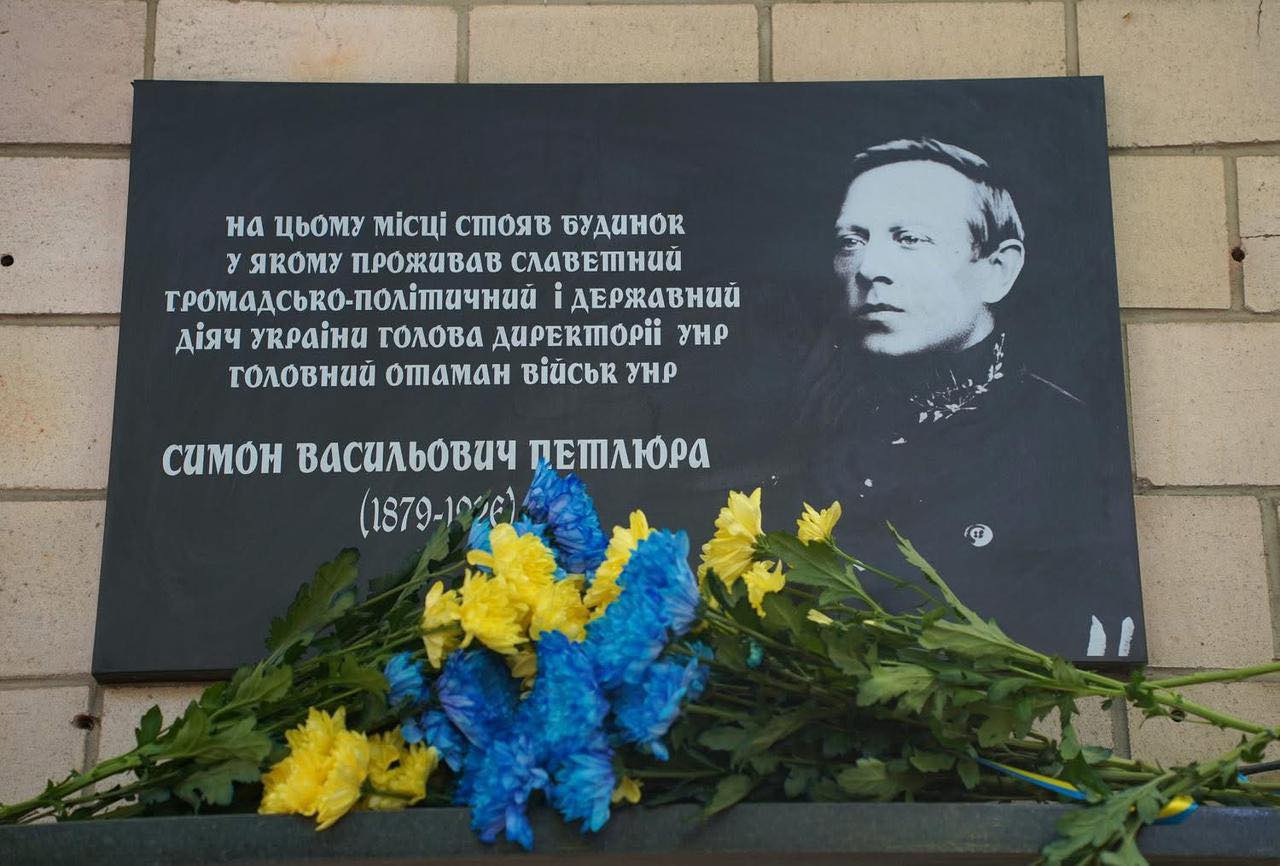
Symon Petliura
Ukrainian revolutionary and leader of the Ukrainian People's Republic.

via Wikipedia: Symon Petliura · see source
Symon Vasyliovych Petliura was a Ukrainian revolutionary, politician, and journalist. He served as the Supreme Commander of the Ukrainian People's Army (UNA) and led the Ukrainian People's Republic during the Ukrainian War of Independence, a part of the wider Russian Civil War. Born to a family of Cossack heritage in Poltava, he embraced socialism and Ukrainian nationalism from an early age, advocating through his prolific journalism. After the 1917 February Revolution, he was elected head of the Republic's military. His leadership saw the restoration of the Republic after a pro-German interlude, an alliance with Poland during the Polish–Soviet War, and ultimately exile in Paris, where he was assassinated in 1926.
- born
- 22 May [O.S. 10 May] 1879
- died
- 25 May 1926
- field
- Revolutionary, politician, journalist
- nationality
- Ukrainian
- known_for
- Supreme Commander of the Ukrainian People's Army, leader of the Ukrainian People
Verified Timeline
Lore & Background
Petliura was born on 22 May [O.S. 10 May] 1879 in a suburb of Poltava, then part of the Russian Empire, to Vasyl Pavlovych Petliura and Olha Oleksiyivna (née Marchenko), of Cossack background. His father owned a transportation business; his mother was the daughter of an Orthodox hieromonk. He studied at the Russian Orthodox Seminary in Poltava from 1895 to 1901, joining the Hromada society in 1898. Expelled in 1901 when his membership was discovered, he had already joined the Revolutionary Ukrainian Party (RUP) in 1900. Under threat of arrest, he moved to Yekaterinodar in 1902, working as a schoolteacher and later as an archivist for the Kuban Cossack Host, organizing over 200,000 documents. In December 1903 he was arrested for organizing a RUP branch and publishing anti-tsarist articles; released on bail in March 1904, he moved to Lemberg. There, under the name Sviatoslav Tagon, he worked alongside Ivan Franko and Volodymyr Hnatiuk as an editor for the journal Literaturno-Naukovyi Vistnyk and as co-editor of Volya newspaper. After the 1917 February Revolution, Petliura was elected head of the Ukrainian General Military Committee and became the first Secretary for Military Affairs. He later commanded the Haydamaky Kish, defending Kyiv during the Arsenal Plant Uprising in January–February 1918. After the April 1918 coup, he was arrested and incarcerated for four months in Bila Tserkva. He participated in the Anti-Hetman Uprising of November 1918 and became a member of the Directorate as Chief of Military Forces. Following the Bolshevik takeover of Kyiv in February 1919, he became the leader of the Directorate on 11 February 1919. He entered an alliance with Józef Piłsudski's Poland in April 1920, agreeing to a border on the River Zbruch and recognizing Poland's right to Galicia in exchange for military aid. The Polish–Soviet War concluded with Poland remaining independent, but most of Ukraine remained under Soviet control, forcing Petliura into exile. He directed the government-in-exile from Poland, and after Bolshevik Russia persistently demanded his extradition, he left Poland in late 1923, traveling through Budapest, Vienna, Zurich, and Geneva under the pseudonym Stepan Mohyla, arriving in Paris in October 1924. In Paris, he directed the government-in-exile and established the Ukrainian-language newspaper Tryzub in October 1925. On 25 May 1926, he was assassinated in Paris by Jewish anarchist Sholem Schwarzbard, who had lost relatives in the pogroms.
Reader's Guide
Petliura's significance lies in his leadership of the Ukrainian People's Republic during a critical period of Ukrainian state-building and the Ukrainian War of Independence. His alliance with Poland in 1920 aimed to secure Ukrainian independence but ultimately failed, leaving most of Ukraine under Soviet control. His legacy is deeply contested due to the role of the Ukrainian People's Army in pogroms that killed tens of thousands of Jewish civilians; Petliura's personal responsibility remains a subject of dispute. His assassination in Paris by Sholem Schwarzbard, a Jewish anarchist who lost relatives in the pogroms, underscores the lasting tensions. Petliura remains a symbol of Ukrainian nationalism for some and a figure of controversy for others.
Did You Know?
- Petliura was expelled from the Russian Orthodox Seminary in Poltava in 1901 after his membership in the Hromada society was discovered.
- In December 1903, he was arrested in Yekaterinodar for organizing a branch of the Revolutionary Ukrainian Party and publishing anti-tsarist articles.
- He lived in Lemberg under the alias Sviatoslav Tagon, working alongside Ivan Franko and Volodymyr Hnatiuk.
- Petliura was incarcerated for four months in Bila Tserkva after the April 1918 Ukrainian coup d'état by Pavlo Skoropadskyi's government.
- He was assassinated in Paris on 25 May 1926 by Jewish anarchist Sholem Schwarzbard, who had lost relatives in the pogroms.
Cossack Roots and Revolutionary Awakening
Born on 22 May [O.S. 10 May] 1879 in a suburb of Poltava, Symon Petliura was the son of Vasyl Pavlovych Petliura, a Poltava city resident who owned a transportation business, and Olha Oleksiyivna (née Marchenko), of Cossack background and daughter of an Orthodox hieromonk. He obtained his initial education in parochial schools and planned to become an Orthodox priest. He studied at the Russian Orthodox Seminary in Poltava from 1895 to 1901, joining the Hromada society in 1898. When his membership was discovered in 1901, he was expelled. He had already joined the Revolutionary Ukrainian Party (RUP) in 1900. Under threat of arrest, he moved to Yekaterinodar in the Kuban in 1902, working for two years—first as a schoolteacher, then as an archivist for the Kuban Cossack Host, helping to organize over 200,000 documents. In December 1903 he was arrested for organizing a RUP branch in Yekaterinodar and for publishing inflammatory anti-tsarist articles in the Ukrainian press outside Imperial Russia (in Austrian-controlled Lemberg). Released on bail in March 1904, he moved briefly to Kyiv and then to Lemberg.
Commander in a Fractured Republic
The February Revolution of 1917 transformed Petliura from a journalist into a military and political leader. In May, delegates at the First All-Ukrainian Congress of Soldier Deputies in Kyiv elected him head of the Ukrainian General Military Committee, and when the Central Rada was proclaimed on 28 June 1917, he became its first Secretary for Military Affairs. Disagreeing with Chairman Volodymyr Vynnychenko, he left the government and became head of the Haydamaky Kish, a military formation of Sloboda Ukraine in Kharkiv. In January–February 1918, the Haidamaky Kish was forced back to protect Kyiv during the Uprising at the Kyiv Arsenal Plant and to prevent the capture of the capital by the Bolshevik Red Guard. After the April 1918 Ukrainian coup d'état, Pavlo Skoropadskyi's government arrested Petliura and incarcerated him for four months in Bila Tserkva. He participated in the Anti-Hetman Uprising of November 1918 and became a member of the Directorate of Ukraine as the Chief of Military Forces. Following the Bolshevik takeover of Kyiv in February 1919 and the emigration of Vynnychenko, Petliura became the leader of the Directorate on 11 February 1919. In his capacity as head of the Army and State, he continued to fight both Bolshevik and White forces in Ukraine for the next ten months. On 5 December 1919, he withdrew to Poland. In April 1920, as head of the Ukrainian People's Republic, he signed an alliance in Warsaw with the Polish government, agreeing to a border on the River Zbruch and recognizing Poland's right to Galicia in exchange for military aid. Polish forces, reinforced by Petliura's remaining troops (some two divisions), attacked Kyiv on 7 May 1920. Following initial successes, Piłsudski's and Petliura's forces had to retreat to the Vistula River and Warsaw. The Polish Army, supported by Ukrainian units, defeated the Bolshevik Russians, but the Red Army remained in parts of Ukraine, and Ukrainians were unable to secure their independence.
A Journalist's Odyssey Across the Empire
Petliura's pre-revolutionary career was defined by an extraordinary restlessness and a relentless commitment to Ukrainian-language publishing. In Lviv, operating under the alias Sviatoslav Tagon, he worked alongside the prominent writer Ivan Franko and Volodymyr Hnatiuk, editing the journal Literaturno-Naukovyi Vistnyk, contributing to the Shevchenko Scientific Society, and co-editing the newspaper Volya. After a nationwide amnesty at the end of 1905 allowed him to return briefly to Kyiv, he discovered that Saint Petersburg offered more publishing freedom than Ukraine itself, where the Ems Ukaz of 1876 had outlawed the Ukrainian language. There he launched the socialist-democratic monthly Vil'na Ukrayina with Prokip Poniatenko and Mykola Porsh, only to see it shut down by censors in July 1905. He then returned to Kyiv to work for the newspaper Rada, and in 1907 became editor of the literary magazine Slovo and co-editor of Ukrayina. When Russian imperial police closed those publications in 1909, Petliura moved to Moscow, briefly working as an accountant before becoming chief editor of the Russian-language journal Ukrayinskaya Zhizn, a position he held from 1912 until May 1917. During World War I, he argued in an article titled 'War and Ukrainians' that Ukrainians, as subjects of the Russian Empire, were obliged to loyally fulfill their duty to the Tsar, and expressed hope that the attitude of the Tsarist authorities towards the Ukrainian question would change. He assured the government that Ukrainians 'will not succumb to provocative influences and will fulfill their duty as citizens of Russia at this difficult time until the end,' and stated he was in favor of the unification of all Ukrainians (including Galicians) under the auspices of Russia.
Pogroms, Exile, and a Parisian Assassination
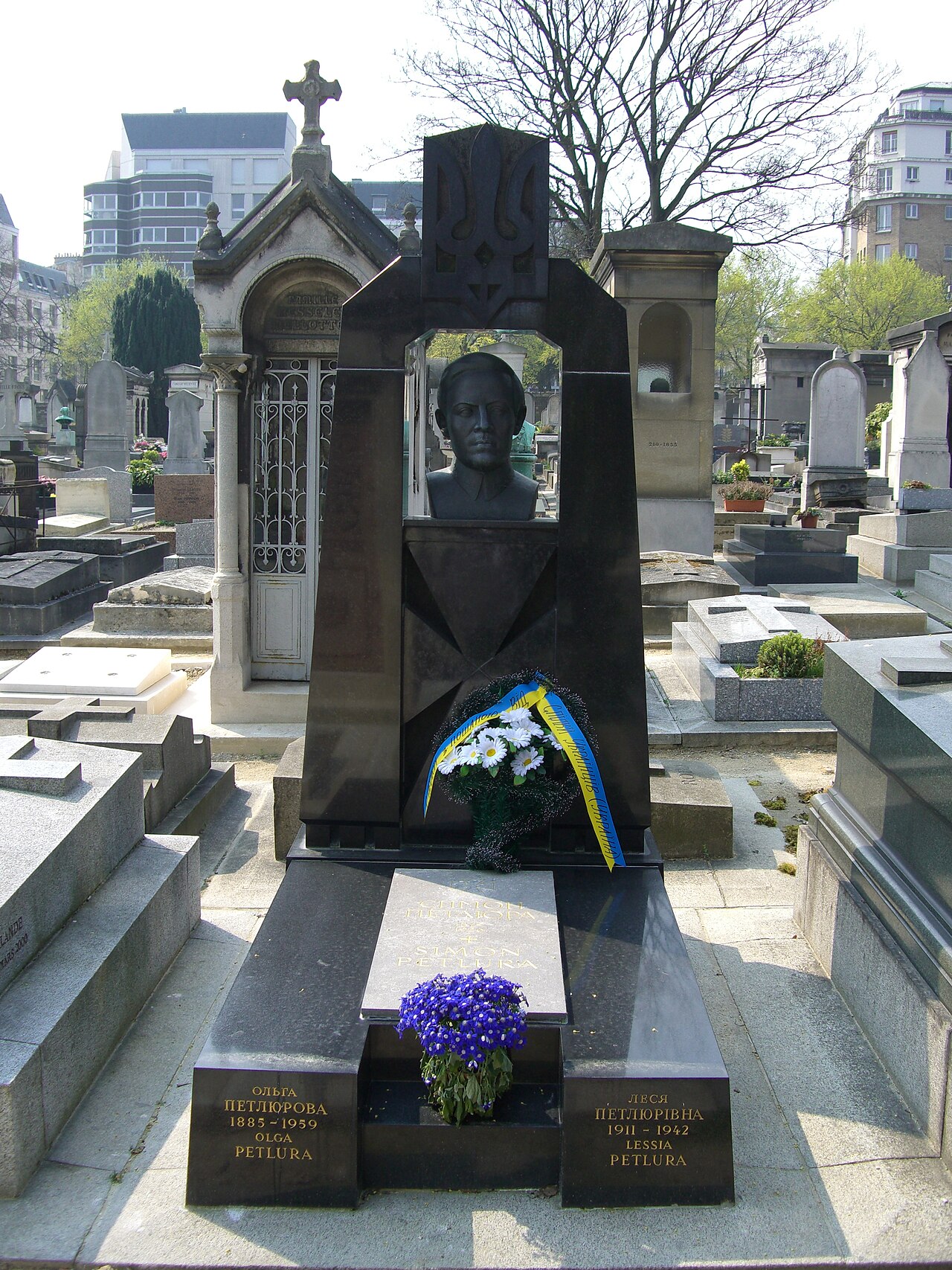
The legacy of Petliura's wartime leadership is inextricably tangled with one of the darkest episodes of the Ukrainian War of Independence. During the Civil War, units of the Ukrainian People's Army were responsible for the deaths of tens of thousands of Jewish civilians in pogroms, and Petliura's personal role in authorizing or condoning those attacks has remained a subject of fierce historical dispute. His exile after the Polish-Soviet War took him first to Poland, where he directed the Ukrainian government-in-exile from Tarnów. When the Soviet government in Moscow requested his extradition, the Poles engineered his 'disappearance,' secretly moving him from Tarnów to Warsaw. In late 1923, one year after the establishment of the Soviet Union, he left Poland, traveling through Budapest, Vienna, Zurich, and Geneva under the pseudonym Stepan Mohyla, arriving in Paris in October 1924 together with former Ukrainian prime minister Viacheslav Prokopovych. In Paris, he directed the activities of the government of the Ukrainian National Republic in exile. In October 1925 he established the Ukrainian-language newspaper Tryzub, continuing to edit and write numerous articles under various pen names with an emphasis on questions dealing with national oppression in Ukraine. On 25 May 1926, barely three days after his forty-seventh birthday, Petliura was shot and killed in Paris by Sholem Schwarzbard, a Jewish anarchist who had lost close relatives in the pogroms. Schwarzbard's act of political assassination transformed Petliura's death into a symbol of unresolved historical grievance, ensuring that the question of his responsibility would echo through Ukrainian, Jewish, and broader European memory for generations to come.
Gallery

Frequently Asked Questions
Who is Symon Petliura?
Symon Vasyliovych Petliura (1879–1926) was a Ukrainian revolutionary, journalist, and politician born in Poltava. He is most widely recognized as the Supreme Commander of the Ukrainian People's Army and the principal military-leader of the Ukrainian People's Republic during the war of independence.
What was Petliura's main role in the revolution?
After the February Revolution of 1917 he was elected to head the Republic's military, effectively making him the armed force's top commander while the political leadership pursued sovereignty. His tenure included the Republic's restoration following a short pro-German occupation and continued fighting against multiple rival armies during the wider Russian Civil War.
How does Petliura's story end?
Petliura was shot dead on 25 May 1926 in Paris, where he had been living in exile after Soviet forces crushed the independence movement. His assassination in a European capital made him a martyr figure in the Ukrainian diaspora.
Why is Petliura important to Ukrainian history?
He is viewed as one of the central architects of modern Ukrainian statehood, having personally led the nation's first serious bid for full sovereignty in the early twentieth century. His blend of frontline military command, political governance, and prolific public writing set him apart from most contemporaries in the independence struggle.
What shaped Petliura's early political outlook?
Coming from a family of Cossack heritage in Poltava, he absorbed both socialist and Ukrainian nationalist ideas as a teenager. He spent his twenties writing and editing journals to spread those convictions before stepping into direct political and military leadership after 1917.
More in Leaders Of Revolution And Independence 1-20
Spotted an error? Know more?
This is a living reference — every entry is fact-audited, and reader corrections feed straight into our audit queue. Suggest an edit · See this site's audit record