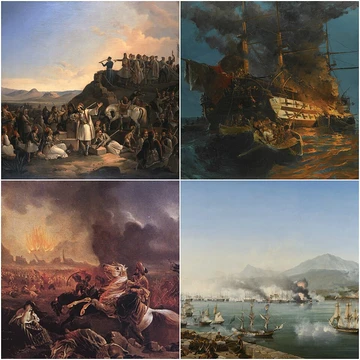
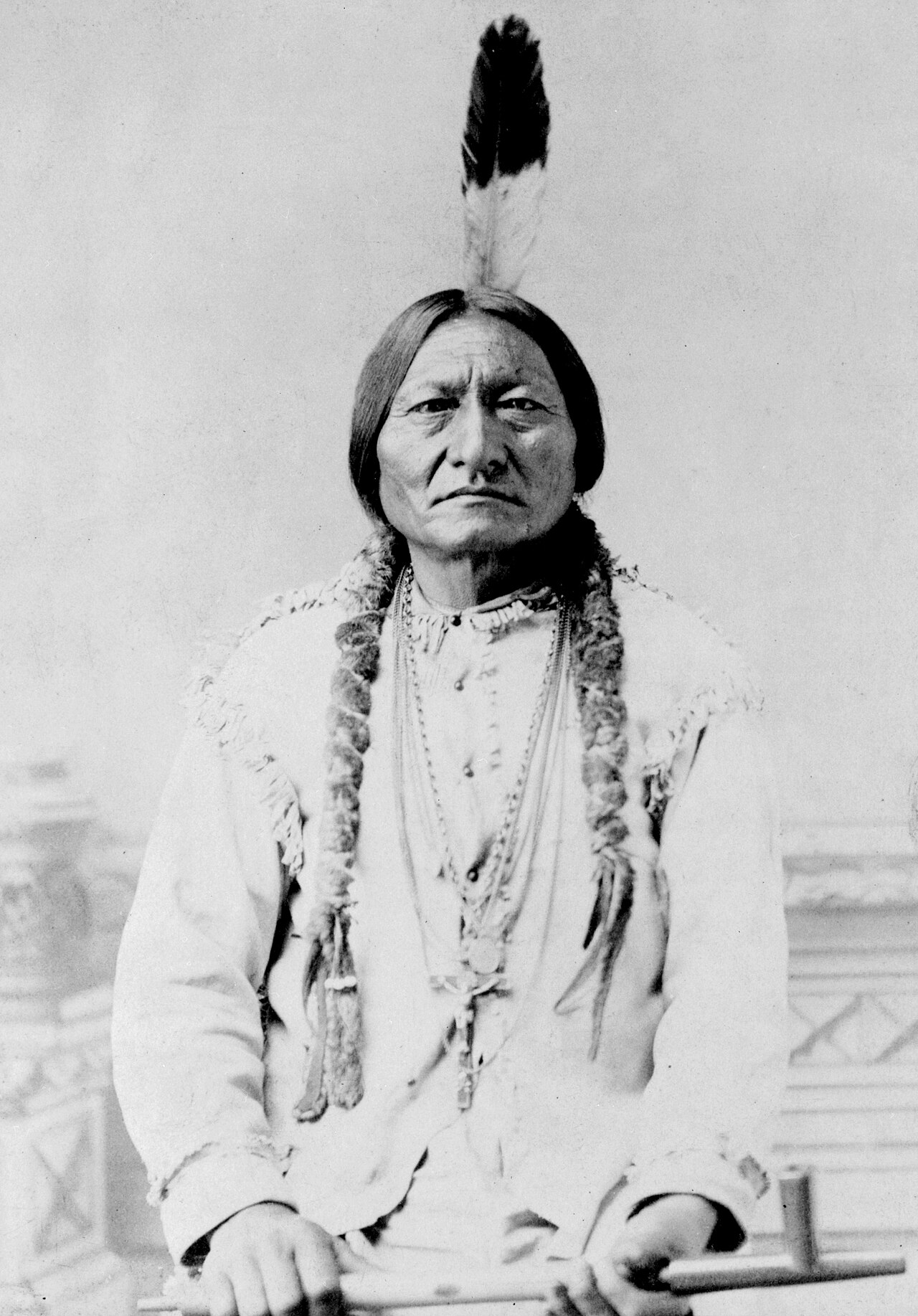
Sitting Bull
Hunkpapa Lakota leader who resisted U.S. policies and inspired a major victory.

via Wikipedia: Sitting Bull · see source
Sitting Bull (Lakota: Tȟatȟáŋka Íyotake; c. 1831–37 – December 15, 1890) was a Hunkpapa Lakota leader who led his people during years of resistance against United States government policies. Before the Battle of the Little Bighorn, he had a vision in which he saw many soldiers, "as thick as grasshoppers", falling upside down into the Lakota camp, which his people took as a foreshadowing of a major victory. About three weeks later, on June 25, 1876, the confederated Lakota tribes with the Northern Cheyenne defeated the 7th Cavalry under Lt. Col. George Armstrong Custer, annihilating Custer's battalion. Sitting Bull refused to surrender after the battle, leading his band north to Wood Mountain, North-West Territories (now Saskatchewan) in May 1877, remaining there until 1881 when he returned to U.S. territory and surrendered.
- born
- c. 1831–37, on land later included in Dakota Territory (possibly along the Yello
- died
- December 15, 1890, Standing Rock Indian Reservation, South Dakota
- field
- Hunkpapa Lakota leader, warrior
- nationality
- Lakota (Hunkpapa)
- known_for
- Leadership during the Great Sioux War of 1876, prophetic vision before the Battl
Verified Timeline
Lore & Background
Sitting Bull was born on land later included in the Dakota Territory sometime between 1831 and 1837. In 2007, his great-grandson asserted from family oral tradition that he was born along the Yellowstone River, south of present-day Miles City, Montana. He was named Ȟoká Psíče (Jumping Badger) at birth, and nicknamed Húŋkešni or "Slow", an allusion to his careful and unhurried nature. At age 14, he accompanied a raiding party that included his father and uncle Four Horns to take horses from a camp of Crow warriors. He displayed bravery by riding forward and counting coup on one of the surprised Crow. Upon returning to camp, his father gave a celebratory feast and conferred his own name upon his son: Tȟatȟáŋka Íyotake, roughly "Buffalo Bull Who Sits Down". His father thereafter was known as Jumping Bull. During the Dakota War of 1862, Sitting Bull's people were not involved. In 1864, two brigades of about 2,200 soldiers under Brigadier General Alfred Sully attacked a village; the defenders were led by Sitting Bull, Gall and Inkpaduta. In September, Sitting Bull was shot in the left hip by a soldier during a skirmish near what is now Marmarth, North Dakota; the bullet exited through the small of his back, and the wound was not serious. From 1865 to 1868, Sitting Bull supported Red Cloud's War by leading numerous war parties against Fort Berthold, Fort Stevenson, and Fort Buford. He did not agree to the 1868 Treaty of Fort Laramie, telling Jesuit missionary Pierre Jean De Smet: "I wish all to know that I do not propose to sell any part of my country." He continued hit-and-run attacks on forts in the upper Missouri area throughout the late 1860s and early 1870s. In 1871 and 1873, he resisted Northern Pacific Railway surveys through Hunkpapa lands. After Lt. Col. George Armstrong Custer's 1874 expedition discovered gold in the Black Hills, tensions increased. In November 1875, President Ulysses S. Grant ordered all Sioux bands outside the Great Sioux Reservation to move onto it, and as of February 1, 1876, the Interior Department certified as hostile those bands who continued to live off the reservation. Before the Battle of the Little Bighorn, Sitting Bull had a vision in which he saw many soldiers, "as thick as grasshoppers", falling upside down into the Lakota camp. About three weeks later, on June 25, 1876, the confederated Lakota tribes with the Northern Cheyenne defeated the 7th Cavalry under Lt. Col. George Armstrong Custer, annihilating Custer's battalion. In response, the U.S. government sent thousands more soldiers to the area, forcing many of the Lakota to surrender over the next year. Sitting Bull refused to surrender, and in May 1877, he led his band north to Wood Mountain, North-West Territories, now Saskatchewan. He remained there until 1881, when he and most of his band returned to U.S. territory and surrendered to U.S. forces.
Reader's Guide
Sitting Bull's significance lies in his role as a Hunkpapa Lakota leader who embodied resistance to U.S. government policies during a period of intense conflict over land and sovereignty. His prophetic vision before the Battle of the Little Bighorn, which his people interpreted as a foreshadowing of victory, became a defining moment. The victory, however, prompted a massive U.S. military response that ultimately led to the surrender of many Lakota bands. Sitting Bull's refusal to surrender and his subsequent exile in Canada for four years underscored his commitment to autonomy. After returning to the U.S., he worked as a performer with Buffalo Bill's Wild West show before returning to the Standing Rock Agency in South Dakota. His death on December 15, 1890, during an attempt to arrest him by Indian agency police accompanied by U.S. officers and supported by U.S. troops, occurred because authorities feared he would join the Ghost Dance movement. During the struggle, Sitting Bull was shot in the chest and head by Standing Rock policemen Lieutenant Bull Head and Red Tomahawk, after the police were fired upon by Sitting Bull's supporters. His body was taken to nearby Fort Yates for burial. In 1953, his Lakota family exhumed what were believed to be his remains, reburying them near Mobridge, South Dakota, near his birthplace. Historians debate whether he was made "Supreme Chief of the whole Sioux Nation" during Red Cloud's War, as claimed by historian Stanley Vestal based on interviews with surviving Hunkpapa in 1930, but later scholars refuted this since Lakota society was highly decentralized.
Did You Know?
- Sitting Bull was named Ȟoká Psíče (Jumping Badger) at birth and nicknamed Húŋkešni or 'Slow' for his careful nature.
- At age 14, he counted coup on a Crow warrior, after which his father conferred the name Tȟatȟáŋka Íyotake upon him.
- He told Jesuit missionary Pierre Jean De Smet: 'I wish all to know that I do not propose to sell any part of my country.'
- Sitting Bull was shot in the left hip during a skirmish in September 1864; the bullet exited through the small of his back, and the wound was not serious.
- His body was taken to Fort Yates for burial, but in 1953 his Lakota family exhumed what were believed to be his remains and reburied them near Mobridge, South Dakota.
Warrior Origins and the Naming Ceremony
Sitting Bull was born on land later included in the Dakota Territory sometime between 1831 and 1837. In 2007, his great-grandson asserted from family oral tradition that he was born along the Yellowstone River, south of present-day Miles City, Montana. At birth he was named Ȟoká Psíče (Jumping Badger), and nicknamed Húŋkešni or "Slow", an allusion to his careful and unhurried nature. When Sitting Bull was 14 years old, he accompanied a group of Lakota warriors, which included his father and his uncle Four Horns, in a raiding party to take horses from a camp of Crow warriors. He displayed bravery by riding forward and counting coup on one of the surprised Crow, which was witnessed by the other mounted Lakota. Upon returning to camp, his father gave a celebratory feast at which he conferred his own name upon his son. The name, Tȟatȟáŋka Íyotake, in the Lakota language, roughly translates to "Buffalo Bull Who Sits Down", but Americans commonly refer to him as "Sitting Bull". Thereafter, Sitting Bull's father was known as Jumping Bull. At this ceremony before the entire band, Sitting Bull's father presented his son with an eagle feather to wear in his hair, a warrior's horse, and a hardened buffalo hide shield to mark his son's passage into manhood as a Lakota warrior.
The Grasshopper Vision and Little Bighorn
Before the Battle of the Little Bighorn, Sitting Bull had a vision in which he saw many soldiers, "as thick as grasshoppers", falling upside down into the Lakota camp, which his people took as a foreshadowing of a major victory in which many soldiers would be killed. About three weeks later, the confederated Lakota tribes with the Northern Cheyenne defeated the 7th Cavalry under Lt. Col. George Armstrong Custer on June 25, 1876, annihilating Custer's battalion and seeming to fulfill Sitting Bull's prophetic vision. Sitting Bull's leadership inspired his people to a major victory. In response, the U.S. government sent thousands more soldiers to the area, forcing many of the Lakota to surrender over the next year. Sitting Bull refused to surrender, and in May 1877, he led his band north to Wood Mountain, North-West Territories, now Saskatchewan. He remained there until 1881, when he and most of his band returned to U.S. territory and surrendered to U.S. forces.
Defiance and the Refusal to Surrender Territory
From 1866 to 1868, Red Cloud, a leader of the Oglala Lakota, fought against U.S. forces in an effort to keep control of the Powder River Country. In support of Red Cloud, Sitting Bull led numerous war parties against Fort Berthold, Fort Stevenson, and Fort Buford and their allies from 1865 to 1868. By early 1868, the U.S. government desired a peaceful settlement. It agreed to Red Cloud's demands that the U.S. abandon Forts Phil Kearny and C.F. Smith. Gall of the Hunkpapa and other representatives signed a form of the Treaty of Fort Laramie on July 2, 1868, at Fort Rice (near Bismarck, North Dakota). Sitting Bull did not agree to the treaty. He told the Jesuit missionary Pierre Jean De Smet, who sought him on behalf of the government: "I wish all to know that I do not propose to sell any part of my country." He continued his hit-and-run attacks on forts in the upper Missouri area throughout the late 1860s and early 1870s. According to historian Stanley Vestal, who conducted interviews with surviving Hunkpapa in 1930, Sitting Bull was made "Supreme Chief of the whole Sioux Nation" at this time. Historians and ethnologists later refuted this, since Lakota society was highly decentralized. Lakota bands and their elders made individual decisions, including whether or not to wage war.
Final Days, Death, and Reburial
After working as a performer with Buffalo Bill's Wild West show, Sitting Bull returned to the Standing Rock Agency in South Dakota. Because of fears that Sitting Bull would use his influence to support the Ghost Dance movement, Indian Service agent James McLaughlin at Fort Yates ordered his arrest. During an ensuing struggle between Sitting Bull's followers and the agency police, Sitting Bull was shot in the chest and head by Standing Rock policemen Lieutenant Bull Head (Tatankapah, Lakota: Tȟatȟáŋka Pȟá) and Red Tomahawk (Marcelus Chankpidutah, Lakota: Čhaŋȟpí Dúta), after the police were fired upon by Sitting Bull's supporters. His body was taken to nearby Fort Yates for burial. In 1953, his Lakota family exhumed what were believed to be his remains, reburying them near Mobridge, South Dakota, near his birthplace.
Gallery
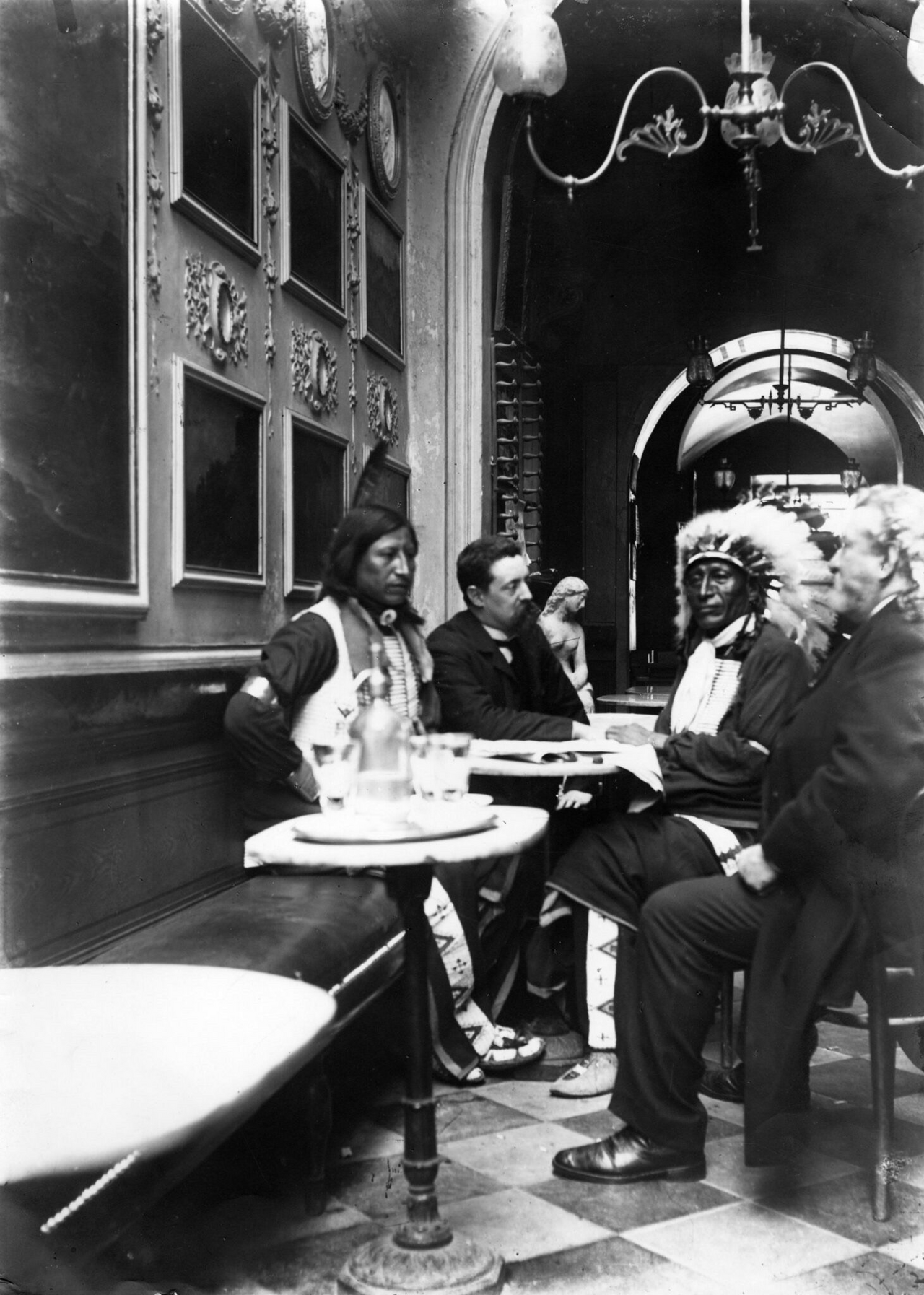
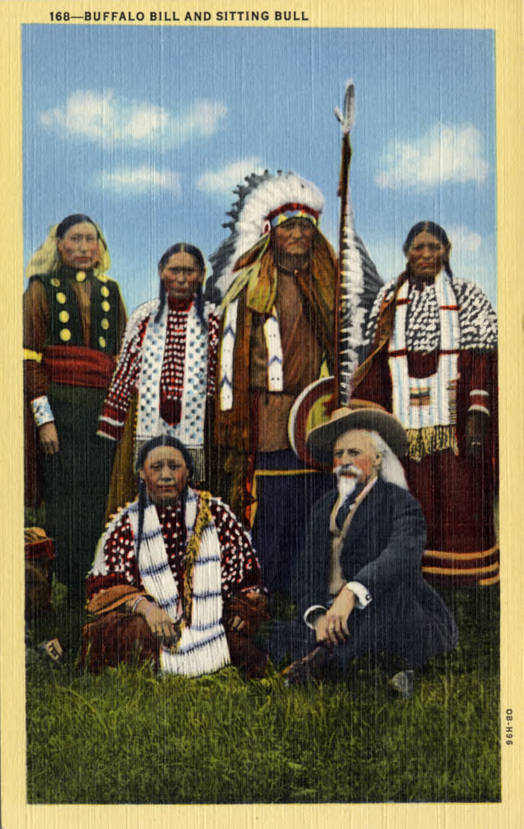
Frequently Asked Questions
Who is Sitting Bull?
Sitting Bull, born Tȟatȟáŋka Íyotake around 1831–37, was a Hunkpapa Lakota leader and warrior who guided his people through years of resistance against U.S. government expansion. He is best known for his spiritual leadership during the Great Sioux War of 1876.
What was Sitting Bull's famous vision before Little Bighorn?
Roughly three weeks before the battle, Sitting Bull shared a vision in which he saw soldiers tumbling upside down into the Lakota camp, as numerous as grasshoppers. His people took this as a clear omen that a great victory was imminent.
How did Sitting Bull's story end?
Sitting Bull was killed on December 15, 1890, on the Standing Rock Indian Reservation in South Dakota. His death occurred amid the growing tensions surrounding the Ghost Dance movement that had swept through Lakota communities in the late 1890s.
What was Sitting Bull's specific role at the Battle of the Little Bighorn?
Rather than directing troops in a conventional military capacity, Sitting Bull's influence was spiritual and unifying—his vision and presence helped rally the confederated Lakota and Northern Cheyenne forces. On June 25, 1876, those allied warriors defeated and annihilated Custer's 7th Cavalry battalion.
Why is Sitting Bull important in Lakota and American history?
Sitting Bull became a powerful symbol of Lakota sovereignty and defiance during a period when federal policies aimed to dismantle tribal autonomy. His leadership during the 1876 conflict cemented his place as one of the most recognizable figures in the broader struggle for Native independence.
More in Leaders Of Revolution And Independence 1-20
Spotted an error? Know more?
This is a living reference — every entry is fact-audited, and reader corrections feed straight into our audit queue. Suggest an edit · See this site's audit record